CLICK HERE TO LEARN THE ANSWERS.
I decided I would also write out the questions and answers here, just in case some of you would rather read the questions and answers, instead! So here they are, in all of their glory and splendor!
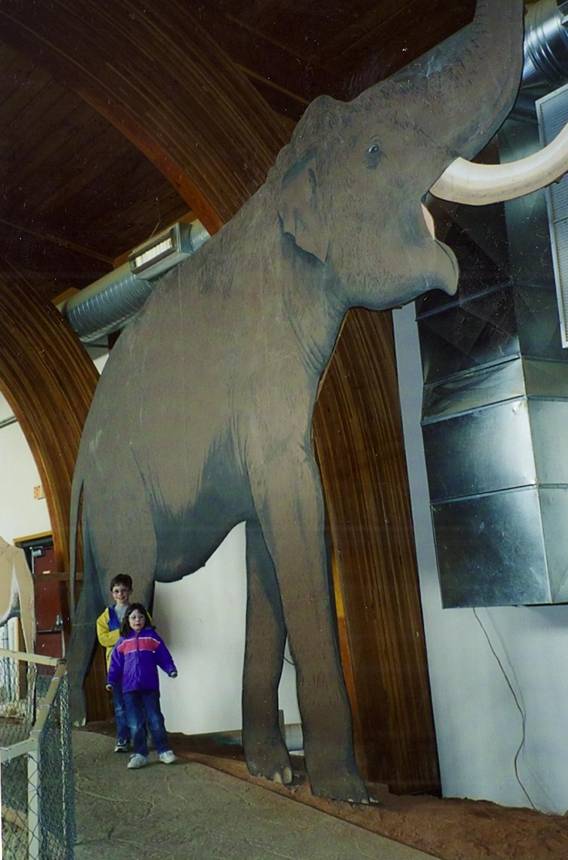
Ever since the fantastic book Jurassic Park came out in 1990, people started to wonder: could this actually happen? Could we actually bring dinosaurs to life via the miracle of cloning? Following the release of the movie in 1993, the idea was on the mind of even more people. Sadly, (or perhaps fortunately), from what we understand about DNA at this point, we simply cannot clone dinosaurs, not even by using mosquitos trapped in amber. DNA is a very fragile molecule, and does not take all that long to break down. Sure, mammoth mummies frozen in the permafrost in Siberia have successfully yielded DNA. Mammoths, however, only went extinct several thousand years ago. From a geological standpoint, mammoths, you and I lived practically at the same time as each other, when compared to how long ago the dinosaurs roamed the earth. Furthermore, the permafrost has acted as a freezer, helping to preserve the DNA in ideal conditions for scientists to extract it from the mammoth at a later date. So to sum up? To the best of our knowledge, Jurassic Park: not happening. However, Pleistocene or Ice Age Park may not be all that far off!
2. Why do sea otters hold hands while they’re sleeping?
Sea otters often do this to keep themselves from drifting apart from other sea otters. Although adult sea otters generally forage for food by themselves, they will often form large groups, called “rafts,” sometimes numbering as many as 2,000 individuals. When in these rafts, to avoid floating apart from each other, they will sometimes hold hands. They will also sometimes tie themselves to kelp when they are sleeping or feeding to keep from floating away, as well.
3. Why did the great auk go extinct?
For those of you who are unfamiliar with the great auk (Pinguinus impennis), this penguin-like creature (a product of convergent evolution) inhabited the North Atlantic Ocean in the Northern Hemisphere, and became extinct mid-way through the 1800s. The great auk was intensely hunted by humans in European waters for their down feathers, (which were actually used in both pillows and hats), as well as for food. (Not the down feathers, mind you, but the meat of the bird and its eggs). It wasn't until 1553, around the time that the nesting sites of the great auk had been all but eliminated on the European side of the Atlantic, that the great auk first became officially protected. In 1775, people who had broken a law forbidding people from killing the great auk for its feathers were actually beaten publicly! Following the local extinction of the great auk in Greenland in 1815, the sole remaining breeding site of the great auk was a small, volcanic island. Off of the coast of Iceland, the island was dubbed "Geirfuglasker," after the Norse term for "great auk," "Geirfugl." In 1830, however, the great auk population on Geirfuglasker came under siege by two elemental forces that it had no hopes of combating: an underwater volcanic eruption and a subsequent earthquake, which combined to destroy the island, terminating most of the rest of the great auks. That’s not to say that the volcanic eruption and volcano are to blame: humanity definitely takes the bullet for that one.
If you have any questions yourself, ask me here at the blog, email me at cuyvaldar123946@gmail.com, comment below the video, or tweet them at me @TNaturalWorld1. Thanks for watching/reading/whatever you did!