Showing posts with label Bison. Show all posts

Tuesday, November 26, 2013

No I Did Not Mean Triceratops, I Meant Ceratops

Recently, the folks over at the Best Western Denver Southwest purchased yet another fossil cast for their amazing hotel!*  This time, the cast is of a skull nicknamed "Judith," a specimen that is referred by some paleontologists to the dinosaur genus Ceratops.  And, no, I didn't mean to say Triceratops.  Don't feel bad if you haven't heard of Ceratops montanus: as a matter of fact, I hadn't really heard of it either until several weeks ago, when Greg Tally informed me that the Morrison Natural History Museum would soon be receiving a very large box in the mail!  Judith is still in the Cretaceous Room here at the MNHM, where she will stay for at least a few more weeks.  I really didn't know much at all about this dinosaur, and was eager to learn more.  Unfortunately, there's not much out there, as Ceratops is based on just a few bones that were discovered in the late 1800s.  Despite the lack of material, Ceratops does have a pretty fascinating history, and is an incredibly important dinosaur; not because of what has been discovered about the fossils themselves, so much as what these fossils resulted in.
Greg Tally peers through one of the fenestrae (literally means "window" in Latin) in the skull of Judith, the Ceratops montanus skull for the hotel that is temporarily on display at the Morrison Museum.  Photo Credit: Greg and Meredith Tally
When it comes to giving an animal or a group of animals a scientific classification, there are a lot of hoops you have to jump through, and a bunch of rules you have to follow.  Sometimes, groups of animals are named after the best known and understood animal in that group.  For example, Stegosaurus is the genus of dinosaur that defined the group of animals called the stegosaurs, and Tyrannosaurus is the genus of dinosaur that defined the group of animals called the tyrannosaurs.  Sometimes, it isn't quite as simple.  Think about it this way: Las Vegas is easily the most famous city in Nevada, and I'm sure I'm not the only one who spent a significant portion of their childhood thinking that Las Vegas was the capital of Nevada.  However, it is Carson City that holds the official title of capital.  Even though Las Vegas receives much more attention than Carson City, the state of Nevada isn't simply going to change where its capital is, and to the best of my knowledge, a change like that never really happens.
Although that comparison was a bit of a stretch and had about as many holes as the skull of Chasmosaurus, I think you get my point.  The same thing goes for scientific names.  Although Triceratops is the best known individual of the dinosaurian group called the ceratopsians, this group is still called the ceratopsians, as opposed to being called the triceratopsians.  That's because it was Ceratops, and not Triceratops, that was described by scientists first.
Ceratops montanus, temporarily on display at the Morrison Natural History Museum.  Photo Credit: Greg and Meredith Tally
The year was 1888, and paleontology in western North America was still going strong.  We've talked about the Bone Wars between paleontologists Othniel Charles Marsh and Edward Drinker Cope before, and we are going to revisit Marsh in this post.  To maximize the number of fossils he could describe, Marsh called upon the talents of a large number of fossil collectors, including the always brilliant Arthur Lakes in Morrison, Colorado.  Another of these collectors was a man named John Bell Hatcher.  Although Hatcher should also be remembered for a large number of his contributions to paleontology, for our purposes here we remember Hatcher as the man who discovered Ceratops.  On a trip to a known dinosaur fossil site near the Judith River in Montana, Hatcher discovered a number of fossils.  One of these fossil discoveries was composed only of a pair of horn cores.

Doesn't sound like much, does it?  Well, truth be told, it wasn't, though it was enough for Marsh to realize that he had something new.  If you click HERE, you can view the two page paper that Marsh published in 1888 that briefly described this new discovery as an animal called "Ceratops montanus."  There are several things of interest that we should take away from this paper, some of which are:


  1. Marsh originally suspected that this new creature was "nearly allied to Stegosaurus of the Jurassic, but differs especially in having had a pair of large horns on the upper part of the head."  Marsh got the location of the horns right, but the close relation to Stegosaurus.....not so much.  Given the enormously tiny sampling of bones he had to work with though, it's not a surprise that Marsh compared this new animal to something that he already knew a good deal about.  Keep in mind that this is the very first scientific description of a ceratopsian dinosaur, so Marsh just had to go off of what had already been discovered.  Which was nothing.
  2. Marsh notes that the "position and direction" of the horns could be likened to the enormous Meiolania, an extinct turtle from Australia, as well as the lizards in the genus Phrynosomax, the horned lizards.  He also notes that amongst the dinosaurs, the "only known example of a similar structure....is the single median horn-core on the nasals of Ceratosaurus," a mid-sized theropod dinosaur from the Late Jurassic Morrison Formation.   
  3. In 1887, the year before this paper was published, geologist Whitman Cross sent Marsh a pair of horn cores about two feet in length and six inches across at their widest point.  Discovered right smack dab in the middle of where Denver, Colorado is today, Cross relayed to Marsh that they had been discovered in beds of Cretaceous rock.  Marsh, however, decided that these horns must have belonged to some sort of enormous bison, and gave the horns the name "Bison alticornis."  Perhaps Marsh was still suffering from the misconception that the 1887 discovery was, indeed, an enormous extinct bison, as these 1887 Denver horn cores are not mentioned in the brief Ceratops paper.  It is mentioned, however, that if the horns were discovered "detached," their "resemblance in form and position of the posterior horn-cores to those of some of the ungulate mammals is very striking," and the horns would "naturally be referred to that group."  I have no evidence to support my hypothesis, but I wonder whether this comparison to the mammalian ungulates is insurance on the part of Marsh, as perhaps at this point he had recognized the true nature of the 1887 horn cores.  This is pure conjecture on my part, and is mostly irrelevant anyways, as in 1889 Marsh recognized the dinosaurian nature of the Denver cores, and referred them to the genus Ceratops.  Today, these horn cores are regarded as belonging to Triceratops.
  4. Marsh mentions that several limb bones, vertebrae, and teeth were also found in the Ceratops horizon, as well as several bits of dermal armor, and states that he believes they also belonged to Ceratops.  Whether this is true or not I do not know, but what I do know to be false is Marsh's next sentence, in which he states that the bones "indicate a close affinity with Stegosaurus, which was probably the Jurassic ancestor of Ceratops."  The specimen is housed in the Smithsonian today, under the catalogue number USNM 2411.  A search through the online records of the Smithosonian shows that 2411 consists only of a partial skull, which seems to be consistent with what I've read in other sources.  I'm not sure whether these other skeletal elements mentioned above have found a definitive dinosaurian home, or whether their true owner is uncertain.  
  5. The final paragraph is, in my opinion, inarguably the most important.  The paragraph reads as follows: "The remains at present referred to this genus, while resembling Stegosaurus in various important characters, appear to represent a distinct and highly specialized family, that may be called the Ceratopsidae."  In this paragraph, Marsh has created the group of dinosaurs that, more colloquially, we refer to as the ceratopsians.  Or, more colloquially than that, "those dinosaurs that look like Triceratops with those horns."

Ceratops was discovered in what scientists now call the Judith River Formation.  Several other ceratopsians have been discovered in this formation, and due to the small amount and fragmentary nature of the material that was originally described as Ceratops, most paleontologists consider the dinosaur to be a nomen dubium.  Nomen dubium pretty much means that the material is too fragmentary for it to be diagnostic, and can't really be used in the future to determine whether new specimens are the same as the original or not.  Whether or not the newly discovered Judith specimen currently on display at the Morrison Museum is, indeed, Ceratops is still up in the air, as the paper has not been published yet.  Almost all of my Ceratops knowledge is out on the table for all to see, so I am not going to speculate or attempt to draw conclusions about something that I don't really know enough about to have an informed opinion on.  Guess we will just have to wait and see!  In the meantime, come on by the Morrison Natural History Museum and the Best Western Denver Southwest to see Judith, and much more!

*If you've been living underground amongst worms and fossils for the last few months, you might not have heard of the hotel, so you can check out some incredible pictures of the best Best Western by clicking HERE and HERE.

Works Cited:

Sunday, February 17, 2013

Zoo Babies: Bison

Today, in honor of the birthday of Kevyn Llewellyn, we are going to be looking at a few photos of a baby bison born about this time last year at the Brookfield Zoo in Chicago, Illinois.  Although frequently incorrectly referred to as buffalo, they are simply different animals, despite the outward similarities between the two groups.  If you see something that looks like it could be either a buffalo or a bison, there is a very, very good bet that you are looking at a bison.  Unless something very strange has happened, and in that case, you will be excused for looking foolish when it comes to your knowledge of the bovids.

Anyways, the bison, despite their once immense numbers (numbering in the tens of millions), were hunted almost to extinction in the 1800s, but have made a stunning comeback, with about 20,000 living in protected areas such as National Parks, and a further 500,000 living on tribal lands and ranches.  Nevertheless, their range is vastly reduced from what it once was.  Many people have come to the aid of the bison over the years, including Theodore Roosevelt and a man named William Hornaday, who together co-founded the American Bison Society at the Bronx Zoo in New York in 1905 in order to help protect these wild creatures. Today, they are labeled as "Near Threatened" by the IUCN due to these conservation efforts. 

Today, the bison is the largest North American mammal, but it wasn't always this way.  In fact, it wasn't always even the largest member of the genus Bison in North America!  Ancient ancestors of the North American bison have been traced by paleontologists to southern Asia to about 400,000 years ago, during the Pliocene Epoch.  Once the bison managed to make it across the land bridge into North America, it diversified and evolved.  One species, Bison latifrons, had a horn-span of a whopping nine feet!  Another species, Bison occidentalis (of which I have a scapula!) is thought to be the direct descendant of the modern bison, and evolved sometime during the late Pleistocene Epoch.

While talking bison with Dr. Robert Bakker and Matt Mossbrucker at the Morrison Natural History Museum, I learned that if you are looking at postcranial elements of a fossil bison (that is fossilized bones from behind the head), they are almost impossible to differentiate from each other.  Not only that, but they are extraordinarily difficult to differentiate from cows, too!  As a matter of fact, the species barrier is quite tentative between the bison and domestic cattle, resulting in the domestication of some bison, as well as hybrids, such as beefalo and cattalo.

Photo credit for all of the photos used in this post goes to the website for ZooBorns.  If you like what you are reading, please feel free to follow us here or via Facebook!  And remember, if you have a birthday coming up, just email me the date at cuyvaldar123946@gmail.com with the date and your favorite animal, and I will do my best to get a post in!

Sunday, February 10, 2013

The Magic of Mariposa Grove

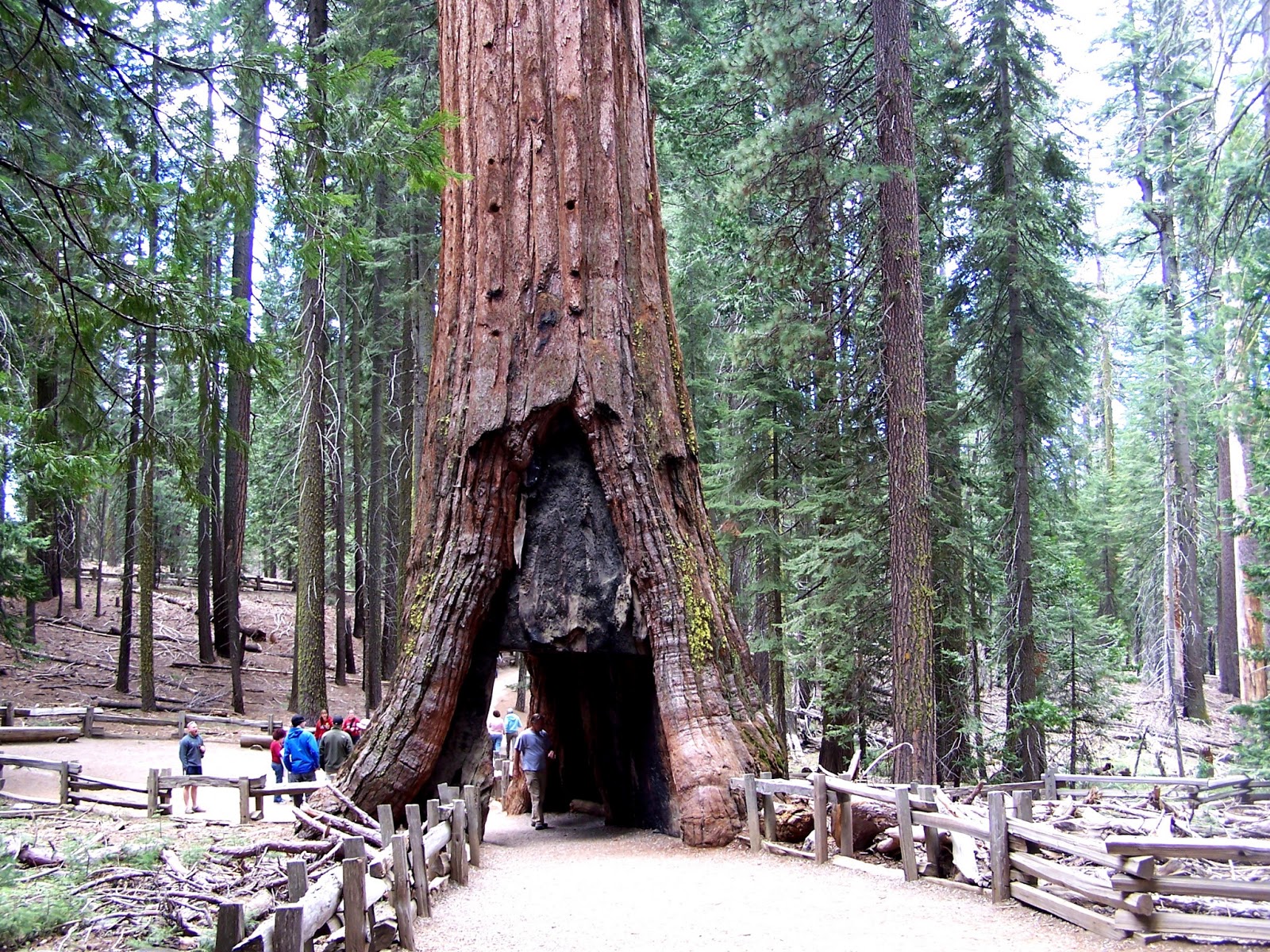
One of the coolest places that we went while in California was the Mariposa Grove, home to the Giant Sequoias, just a short drive outside of Yosemite.  It was absolutely incredible!  These trees were just simply massive, you couldn't even begin to get over their enormous size!  Here are some pictures of it, with myself, my sister, my father, my mother, and some other random people randomly in there for a size comparison!


We also saw these really cool and weird looking red flowers all over the place!  These flowers belong to a plant called the "snow plant," and belong to the genus Sarcodes.  Related to the heaths (i.e. rhododendrons, blueberries  and cranberries), the snow plant is an interesting parasitic plant.  Instead of living off of dead plant and animal material, they infect fungi.  However, they don't kill the fungi once its been infected.  Instead, the fungi and the flower help each other out in a classic case of mutualism!
Finally, I was really excited by this burnt log that, in my opinion, greatly resembled the devil.  Other members of my family thought it resembled a bison more, but clearly they are insane.
 The photo credit for all of the photos in this post go to Julie Neher.

Tuesday, February 5, 2013

Bison: Up Close and Personal!

At one point on our Grand Teton/Yellowstone/Sun Valley driving trip in 2006, we went on a ranger-guided nature walk in Yellowstone.  As we were walking along the trail, the ranger told us a lot about the local wildlife, and mentioned at least a few times the dangers of confronting a bison.  The ranger led us into a small clearing surrounded by tree for a short break, when suddenly, a large bull bison wandered by right behind the ranger along the trail. 
A bison, right up close and personal on the path!  Photo Credit: Julie Neher
Everyone froze, staring at the bison as it started blankly right back at us.  Fortunately, it was uninterested in us, and wandered on along the path, without increasing the "Bison Casualty Count" for that year!

Tuesday, November 27, 2012

Upcoming Lecture: Animal Adventures With Zack Neher Part 1

Hey everyone!  So I just wanted to let you know that I am going to be having a trio of lectures next calendar year, and the first one is rapidly approaching!  It is on Thursday, January 10th from 4:00 PM to around 5:15 PM.  It will be held in the main auditorium at Fairview High School in Boulder, Colorado, and the address is 1515 Greenbriar Boulevard.  Admission will be free, but 90% of the proceeds will be going towards the Morrison Natural History Museum where I volunteer, while the other 10% will be going towards funding the Fairview Knowledge Bowl Team.  HERE IS THE LINK TO THE ZACK NEHER'S LECTURES PAGE ON FACEBOOK, WHICH YOU ALL SHOULD LIKE!

What will be at the lecture?  Well, just like last time, we will have a fossil table down in front, with tons of fossils, ranging from whale and bison bones to spiders preserved in amber, red fox skulls to mosasaur jaws, and much, much more! 

And, most importantly, what will we be talking about at the lecture?  Well, I am just so glad you asked!  This lecture is going to be covering a very wide variety of seemingly-unrelated topics.  But never fear, for I have artfully woven them into an intricate tapestry of fun.  Here are some of the topics and animals that we will be learning about!

I guarantee that it will be a fun-filled and entertaining evening chock-full of awesome animals, amazing video, and more than a fair share of Psych references!  So please, join us if you can!  Hope to see you all there!

And please, if you like what you're reading, make sure you click the subscribe button off to the right!  

    Friday, October 19, 2012

    Animal Spotlight: Aurochs

    This post is the birthday post of Govind Kamath!  Happy birthday, Mr. Kamath!  If you have a birthday coming up, just email me the date at cuyvaldar123946@gmail.com with the date and your favorite animal, and I will do my best to get a post in!

    Over the years, you may have pondered, "Where does my burger come from?"  You probably just meant where was the cow that it came from.  But now here is something else for you to ponder.  Where the heck did the cow even come from?  Do you ever just see wild, black and white cows?  Well, I am here to tell you all about the evolution of the cow.
    A Watusi/Longhorn pileup!  They actually crashed into each other, though!  Trust me, I was there, you can even see my sweatshirted elbow in the mirror thingy!
    During the Pliocene Epoch, from around 5 to 2 MYA, the planet went through a cooler spell.  The frequent ice ages were a part of this cool spell, as was the most frequent Ice Age.  This colder weather caused many of the worlds forests to decrease in area, which in turn caused the world's grasslands to expand.  This led to the evolution of many large grazing animals, and helped contribute to the Pleistocene Megafauna, often called the Ice Age Megafauna.  One of these large animals that evolved was the Aurochs.

    The Aurochs (Bos primigenius), first became domesticated during the Neolithic Age, or the "New Stone Age," probably around 12,000 years ago.  As a matter of fact, two waves of domestication occurred.  As you can see in the map below, there were three different subspecies of the Aurochs; one in northern Africa; one for Europe and Asia; and a third for the mysterious subcontinent of India, as Rajesh Ramayan Koothrappali says in "The Big Bang Theory."  The two different domestications happened with the Eurasian subspecies, Bos primigenius primigenius, and the Indian subspecies, B. p. namadicus

    These two different domestications of these two different species of cattle led to two different domesticated cattle!  In India, we have the Zebu cattle, which has been given its own scientific subspecies name, Bos primigenius indicus.  The other, Eurasian kind has become the cow that we know today from driving down the street and the Chik-fil-A ads.  While other types of bovines (members of the family Bovidae, a group of ungulates that includes water and African buffalo, yaks, bison, and, of course, cattle) have been domesticated throughout the years, specifically the water buffalo, the south-east Asian Banteng, and the Indian Gaur, it is cattle that have remained the most widely used, for a wide variety of purposes, too.

    The Aurochs is now extinct.  The very last recorded female passed away in 1627 in the Jaktorów Forest in Poland.

    There are two particularly interesting breeds of domesticated cattle that I would like to now draw to your attention.  Back in December of 2011 on our trip down to Texas to visit my gramma, on the same trip where we visited the Heritage Museum of the Texas Hill Country and saw the Acrocanthosaurus footprints, we also visited the San Antonio Zoo, as well as the Natural Bridge Wildlife Ranch near San Antonio.  This is an awesome place for EVERYONE to visit!  You get to roll down your windows as you drive through a park chock-full of deer, antelope, zebra, and bovines, and you get to drop food for them!  There are also three members of the order Struthioniformes (aka the ratites), like the South American rhea, the Australian emu, and, most terrifying of all, the African ostrich.  The ostriches was absolutely terrifying, and I will talk about them in a later blog post!  But also at the ranch they had two pretty crazy types of cattle!

    The first was the Ankole-Watusi, often called simply the Ankole cattle or the Watusi.  Originally bred in Africa, the Watusi was named after the Watusi tribesmen (now the Tutsi of Rwanda and Burundi).  This type of cattle has enormous horns that can span over six feet!  Both genders have these horns, and they can grow from between 1,500 - 1,800 pounds!  Below are some pictures that my family and I took of the cattle walking by our car!
    A Watusi.  CHECK OUT THOSE HORNS!
    Another Watusi.  CHECK OUT THOSE HORNS!
    A baby Watusi!  HOW CUTE!
    The second crazy type of cattle is the Texas Longhorn.  The Texas longhorn is, of course, native to the Lone Star State, and reports of the longhorn enduring thirst while still being able to fight off packs of wolves, as well as bears (presumably grizzly bears), from the pioneer times is not uncommon.  The longhorn, like the Watusi, also has six foot horns possessed by both sexes.  According to the Natural Bridge Wildlife Ranch Adventure Guide Book, the longhorn "helped form the basis of the ranching industry of the American West during the 19th century."
    A Texas longhorn.  CHECK OUT THOSE HORNS.
    Another Texas longhorn.  CHECK OUT THOSE HORNS.
    The aftermath of the Watusi/Longhorn pileup seen above!
    Whoever said cows weren't interesting!

    Tuesday, July 31, 2012

    Animals of South Dakota: Part 2

    NOW.  What animals should you be watching for on your trip?  Well, I am so glad you asked!  There are going to be three main areas where you would be able to see wildlife; the Prairies (P), the Pine Forests (PF), and the Black Hills (BH).

    1.  Bison - If you are lucky, you might get stuck for a few minutes as a herd of bison crosses the road in front of you!  Be careful when viewing these animals, and use common sense; don't be the stereotypical stupid tourist and get yourself trampled to death by the bison.  They are the largest living mammals in North America, and can be testy. - P, BH


    2.  Mule Deer - Just like we have in Boulder.  - P, PF, BH
    A pair of mule deer fawns, near my house
    3.  Pronghorn - One of my favorite animals, the Pronghorn Antelope is the second fastest animal in the world, and the fastest in North America, capabable of running around 61 MPH.  Why it can do that, we will talk about next Wednesday. - P, BH

    4.  Red and Gray Fox, Coyote - Just like we have in Boulder, except for the Gray Fox. - P
    A picture of a gray fox, taken by me at Brookgreen Gardens in  South Carolina
    5.  Turkey Vulture - Watch for these guys anywhere, but they should be especially easy to spot on the vast swathes of prairie separating you from South Dakota.  They are instantly recognizable by their "V-Shaped" wing profile, their relative lack of wing-flapping, as well as the fact that they are probably circling something in the air.  Usually groups of them will signifiy a dead animal, as they are carrion eaters. - P, PF, BH

    6.  Bighorn Sheep - Just like we have in Colorado - PF, BH

    7.  These are the main ones to watch for, but if you get really lucky, you might see one of the black-footed ferrets in the Badlands, or a badger in the prairies!
    Related Posts Plugin for WordPress, Blogger...
    Related Posts Plugin for WordPress, Blogger...